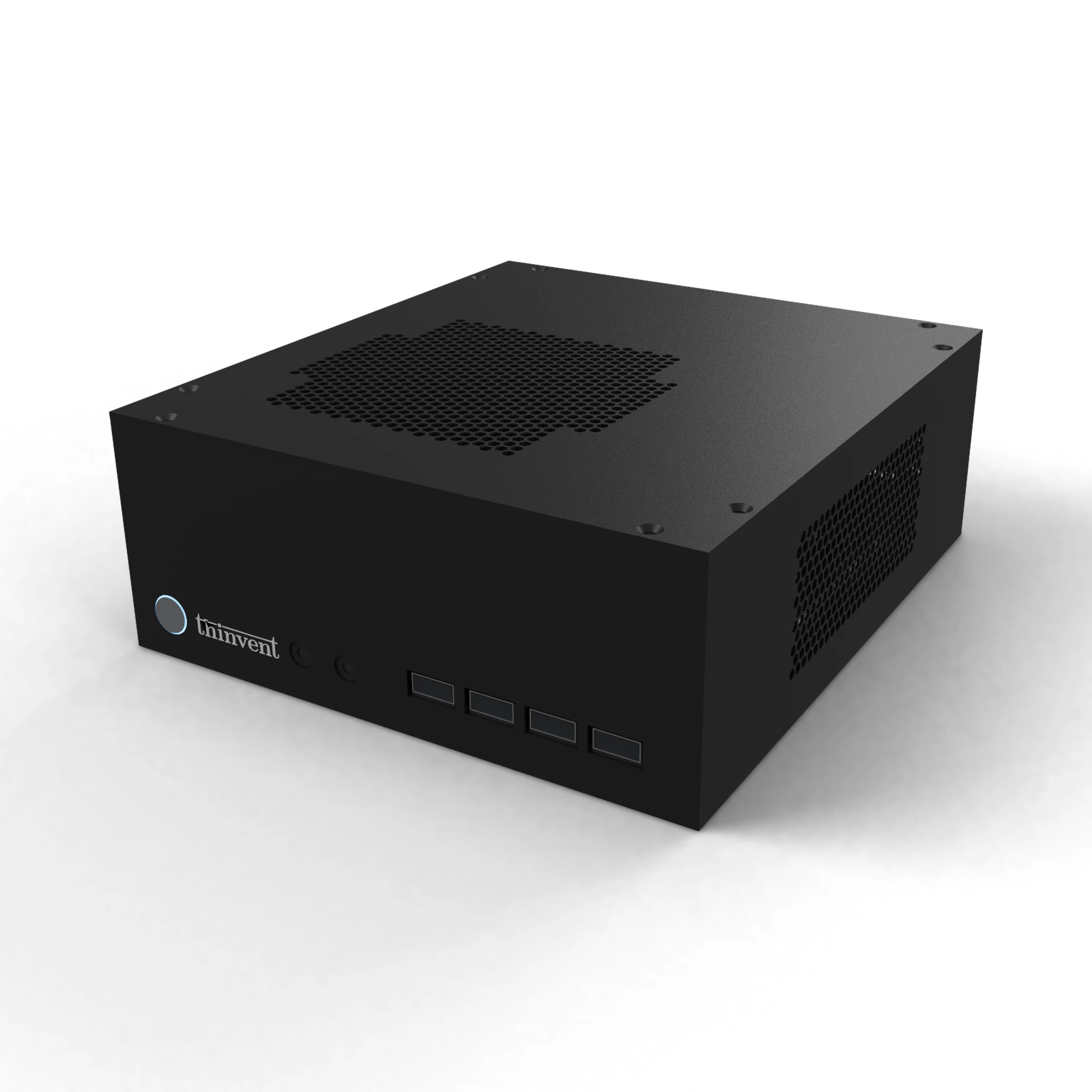
What Is a Thin Client System?
A thin client system is an architecture in which the client device performs only the minimum processing, and most of the processing runs on a server. The client, called a thin client, is typically a terminal with no large local storage and no locally installed applications. The user works in a virtual desktop environment hosted on the server.
Key Features
-
Centralized processing: Applications and data run on the server, not on the client.
-
Minimal local hardware: The client needs only enough processing power to display the remote session.
-
Centralized management: Software updates and security settings are applied on the server.
-
Reduced local data: Because files stay on the server, less data is stored on each device.
Thin Client Compared with a Full PC
| Feature | Thin client | Full PC |
|---|---|---|
| Main processing | Server | Local device |
| Local storage | Small or none | Large |
| Application installation | Server-side | Local |
| Management | Centralized | Per device |
Use Cases
Thin client systems are used for remote work, shared terminals in offices and factories, and environments that need network separation or controlled data handling. A thin client suits a task that runs in a virtual desktop, while a PC with a processor such as an Intel Core i5 or i7 suits a task that runs applications locally.
Thinvent Products for Thin Client Use
The Thinvent range includes the Micro 5R Thin Client, which uses an ARM Cortex A53 processor (4 cores, up to 2.0 GHz), 2GB onboard RAM, 16GB eMMC storage, WiFi 6 and Bluetooth, and Thinux embedded Linux. The Thinvent range also includes Industrial PCs, Aero Mini PCs and Treo Mini PCs, which can serve as client or server hardware in a thin client deployment. The Thinvent range does not include a model described as an all-in-one PC.