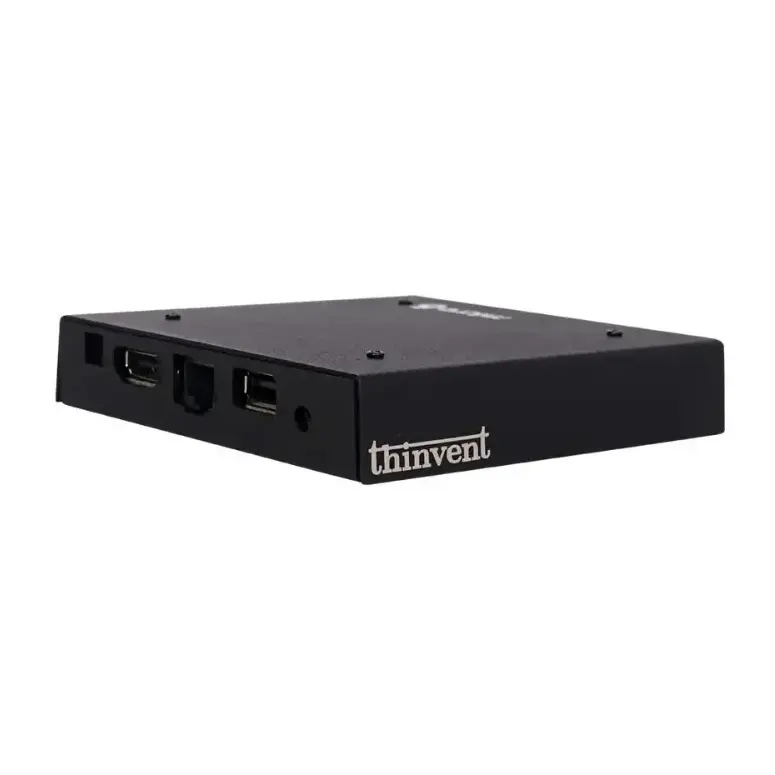
A thin client system is a streamlined computing solution where the primary processing and data storage occur on a central server or in the cloud. The local device, or thin client, acts as a secure terminal to access these centralized resources. This architecture offers distinct advantages over traditional desktop PCs, focusing on security, manageability, and cost-efficiency.
The core technical features of a thin client system include a low-power processor (often ARM-based or Intel Atom/Celeron/N-series), minimal onboard memory (typically 2GB to 8GB), and compact solid-state storage (e.g., 16GB to 128GB eMMC or SSD). These specifications are sufficient for running a lightweight operating system and handling network protocols like RDP, Citrix HDX, or VMware Blast, but are not designed for local application processing. Key physical characteristics are a small, fanless form factor for silent and reliable operation in diverse environments, multiple display outputs (HDMI/DisplayPort), and essential connectivity ports (USB, Ethernet).
Thin client systems are deployed in scenarios demanding centralized control, security, and simplified IT management. Common use cases include Virtual Desktop Infrastructure (VDI) for corporate offices, call centers, and healthcare facilities; digital signage and kiosks in retail and public spaces; and secure access points in manufacturing and industrial settings. Their locked-down nature makes them ideal for environments where data security and endpoint consistency are paramount, preventing unauthorized software installation or data leakage from the device itself.
| Feature | Benefit | Typical Specification |
|---|---|---|
| Centralized Management | Simplified software updates, deployment, and security policies from a single server. | Managed via connection broker (e.g., VMware Horizon, Citrix). |
| Enhanced Security | No local data storage; OS and apps run in a controlled data center environment. | Local storage 16-64GB, often read-only OS image. |
| Low Total Cost of Ownership (TCO) | Reduced hardware costs, lower energy consumption, and less IT support overhead. | Power adapter 5V-12V, 10W-30W typical. |
| High Reliability & Longevity | Fanless design with no moving parts minimizes failure points for 24/7 operation. | Operating temperature range often 0°C to 40°C+. |
| Flexible Connectivity | Connects to virtual desktops and cloud applications from any location. | Dual-band Wi-Fi, Gigabit Ethernet (1000). |
Thinvent Thin Client Solutions
Thinvent offers a comprehensive range of thin client devices designed to deliver the core benefits of this architecture. Our solutions, like the Micro 5 Wifi and Micro 6 Pro, utilize efficient ARM processors and our proprietary Thinux™ Embedded Linux for a secure, lightweight, and manageable endpoint experience. For environments requiring x86 compatibility or higher performance for protocol offloading, our Treo and Industrial PC series feature Intel processors like the N100. Whether you need a basic terminal for VDI, a robust device for industrial digital signage, or a customizable platform for a specialized application, Thinvent provides reliable, fanless thin clients built for continuous operation in demanding commercial and industrial settings.