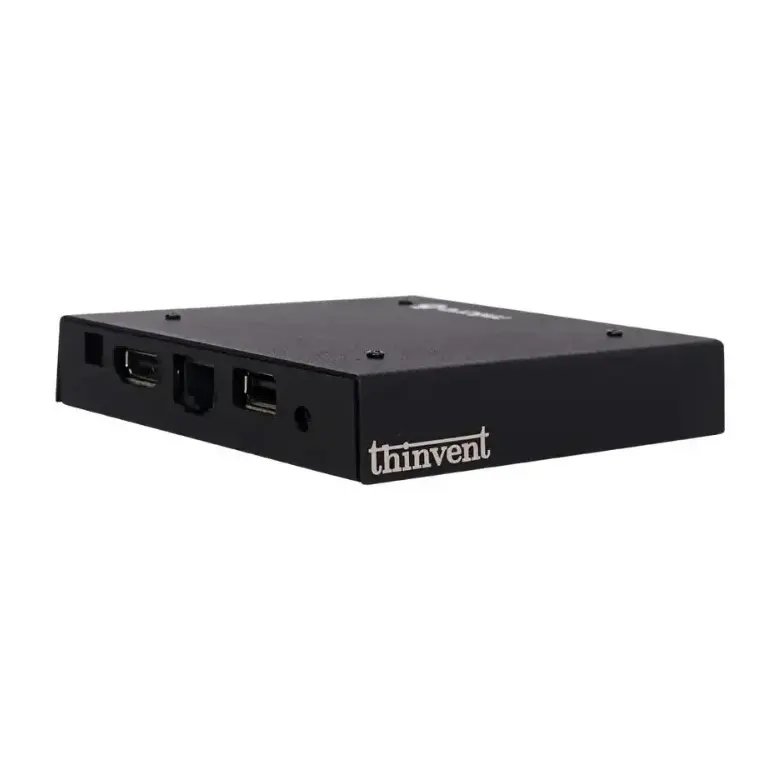
What "Fanless PC" Means for Industrial and DIY Projects
A fanless PC uses passive cooling instead of a spinning fan: heat moves from the processor into a heatsink, then into a metal chassis that radiates it into the surrounding air. The result is a computer with no moving parts in the cooling path, which means no dust being pulled inside, no filter cleaning schedule, no fan bearing to wear out, and no audible whirr in a quiet room or a control cabinet. For custom projects — whether you are building a kiosk, a machine controller, a data logger or a small home lab server — that combination eliminates one of the most common failure points in a 24/7 installation.
The trade-off is thermal design. Because there is no forced airflow, a fanless system depends on a chassis large enough to dissipate the processor's heat, and on sensible placement: vertical mounting, clearance on all sides, and an ambient temperature inside the rated range. Choose a CPU with a modest thermal design power (TDP) and the machine will stay comfortable; push a high-wattage chip into a sealed aluminium box and it will throttle under sustained load.
Key Specifications to Check Before You Build
When comparing fanless industrial computers for a custom project, these are the numbers that actually decide whether the build succeeds:
| Specification | Why it matters | Typical fanless-friendly range |
|---|---|---|
| Processor TDP | Drives how much heat the chassis must shed | 6 W – 28 W (Intel Celeron |