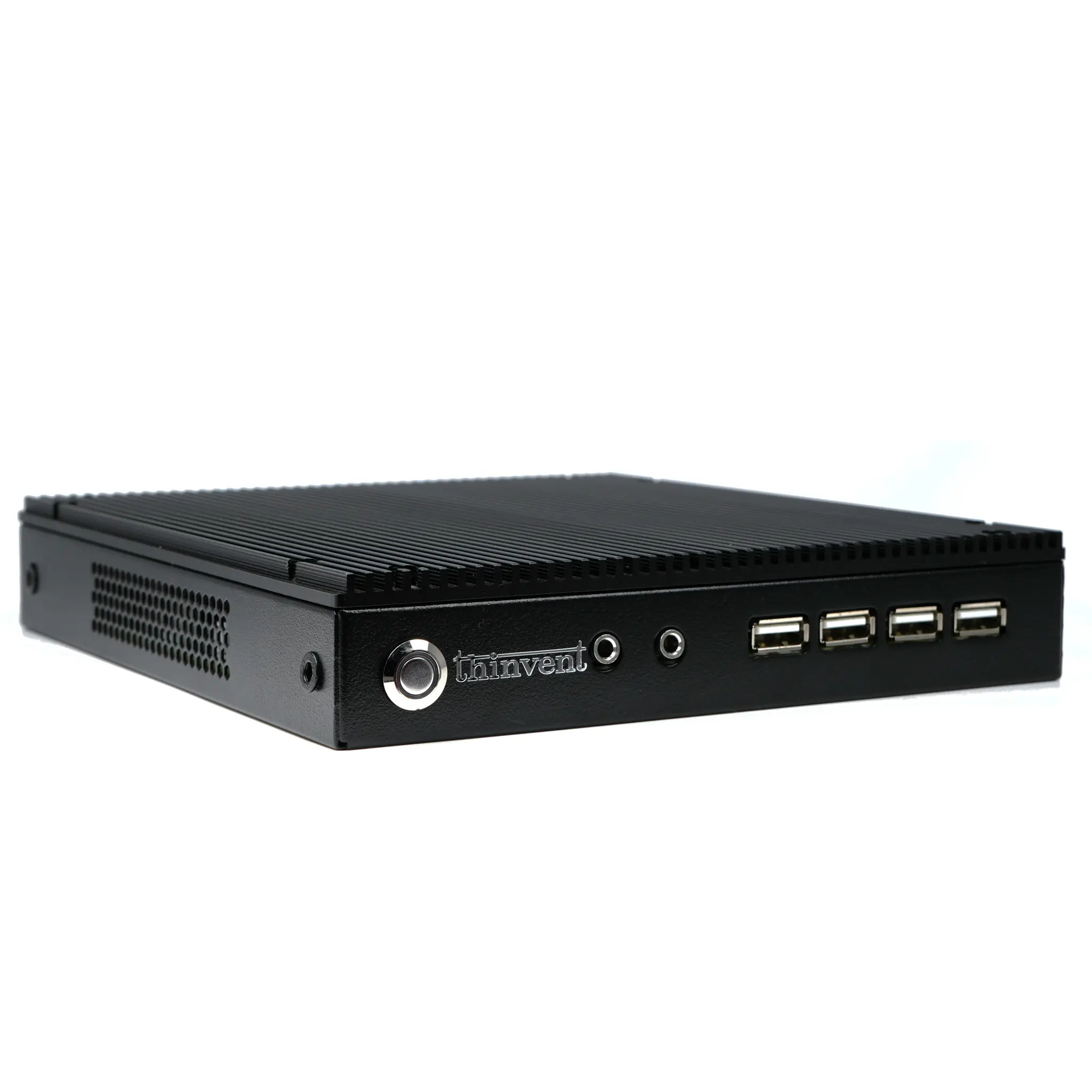
What Are Thin Client Terminals?
A thin client terminal is a lightweight, network-dependent computing device designed to connect to a centralized server or cloud environment where the primary processing and data storage occur. Unlike traditional desktop PCs, thin clients have minimal local hardware—typically a low-power processor, modest memory, and small storage—relying instead on a server to run applications and manage data. This architecture makes them highly secure, energy-efficient, and easy to manage centrally, which is ideal for standardized enterprise and institutional deployments.
Key Specifications and Technical Details
Modern thin client terminals prioritize reliability, low power consumption, and silent operation. Core specifications often include Intel® Celeron or Intel® N-series processors (like the N100), which offer efficient 4-core performance with low thermal design power (TDP). Memory configurations typically range from 4GB to 16GB of DDR4 RAM, with local SSD storage from 128GB to 512GB primarily for the operating system and caching. A defining feature is fanless cooling, which eliminates moving parts for silent, maintenance-free operation in sensitive environments. Standard connectivity includes Gigabit Ethernet for stable network access, multiple USB ports for peripherals, and HDMI/DisplayPort outputs for multi-monitor setups. They support various operating systems optimized for thin client use, including Windows IoT, Linux distributions, and specialized embedded OS.
Primary Use Cases and Applications
Thin client terminals are deployed in scenarios requiring centralized control, high security, and low total cost of ownership.
-
Virtual Desktop Infrastructure (VDI): The most common application, where users access a virtual Windows or Linux desktop hosted on a server.
-
Call Centers and Office Workstations: For tasks like CRM, data entry, and communication apps where performance needs are consistent and security is paramount.
-
Healthcare: Used at nursing stations and for medical record access, where data security (HIPAA/GDPR compliance) and silent operation are critical.
-
Education: In computer labs and libraries, providing a consistent, manageable, and cost-effective student computing environment.
-
Digital Signage and Kiosks: Reliable, always-on devices for driving displays in retail, hospitality, and public information systems.
Comparison: Thin Client vs. Traditional Desktop
| Feature | Thin Client Terminal | Traditional Desktop PC |
|---|---|---|
| Processing Power | Low to Moderate (Remote) | High (Local) |
| Local Storage | Minimal (128-512GB SSD) | Large (512GB+ HDD/SSD) |
| Primary Use Case | Centralized/Cloud Computing | Local Applications & Gaming |
| Management | Centralized, Easy to Update | Individual, Complex |
| Security | High (No local data) | Variable (Local data at risk) |
| Power Consumption | Very Low (10-25W) | Moderate to High (65W+) |
| Total Cost of Ownership | Lower (Hardware + Management) | Higher (Hardware + IT Support) |
Thinvent Thin Client Solutions
Thinvent offers a robust range of industrial-grade thin client terminals designed for 24/7 reliability in demanding environments. Our solutions, like the Aero Mini PC series, feature fanless, compact designs with efficient Intel processors (e.g., N100) and support for multiple operating systems including Windows 11 IoT, Windows 11 Pro, and various Linux distributions. Built for seamless integration into VDI and cloud architectures, Thinvent thin clients provide the durability, security, and silent operation required for enterprise, healthcare, education, and digital signage applications worldwide.