What Are Embedded Systems?
Embedded systems are specialized computing systems designed to perform dedicated functions within larger mechanical or electrical systems. Unlike general-purpose computers, they are typically optimized for specific tasks, offering high reliability, real-time performance, and low power consumption. These systems form the core of modern industrial automation, IoT devices, digital signage, and medical equipment, where consistent operation in challenging environments is paramount.
Key Specifications for Embedded Computing
Industrial embedded computers prioritize durability and consistent performance. Key technical specifications include:
-
Fanless, Rugged Design: Passive cooling eliminates moving parts, preventing dust ingress and enabling operation in wide temperature ranges (-20°C to 60°C is common).
-
Low-Power Processors: Efficient CPUs like Intel's N-series (e.g., N100) provide ample compute for edge applications while minimizing heat and energy use.
-
Industrial-Grade Components: Use of long-life memory, storage, and power supplies ensures 24/7 reliability.
-
Rich I/O Connectivity: Multiple Ethernet ports, USB, serial (COM), and display outputs (HDMI) allow for direct sensor, peripheral, and network integration.
-
Flexible Operating Systems: Support for lightweight, secure OS options like embedded Linux (Ubuntu LTS, Thinux™) or Windows IoT is critical for application stability.
Applications and Use Cases
Embedded computers are the backbone of countless industries:
-
Industrial Automation & Control: PLCs, machine vision, robotics, and SCADA systems.
-
Digital Signage & Kiosks: Powering interactive displays in retail, transportation, and public venues.
-
IoT Gateways & Edge Computing: Aggregating and processing data from sensors before sending it to the cloud.
-
Thin Clients & VDI: Providing secure, centralized desktop access in enterprise and healthcare settings.
-
Medical & Laboratory Equipment: Controlling diagnostic machines and monitoring systems where precision is critical.
Comparison: General-Purpose vs. Embedded Industrial PCs
| Feature | General-Purpose Desktop | Industrial Embedded PC |
|---|---|---|
| Design | Consumer-grade, active cooling (fans) | Rugged, fanless, sealed chassis |
| Operating Temp | Limited (typically 5°C - 35°C) | Wide range (e.g., -20°C to 60°C) |
| Reliability | Designed for intermittent use | Built for 24/7 continuous operation |
| I/O Options | Standard consumer ports (USB, HDMI) | Industrial ports (COM, GPIO, dual LAN) |
| Power Supply | Standard ATX | Wide-range DC input (e.g., 9-36V) |
| Typical OS | Windows 10/11 Home/Pro | Windows IoT, Linux, FreeDOS |
Thinvent's Embedded Computing Solutions
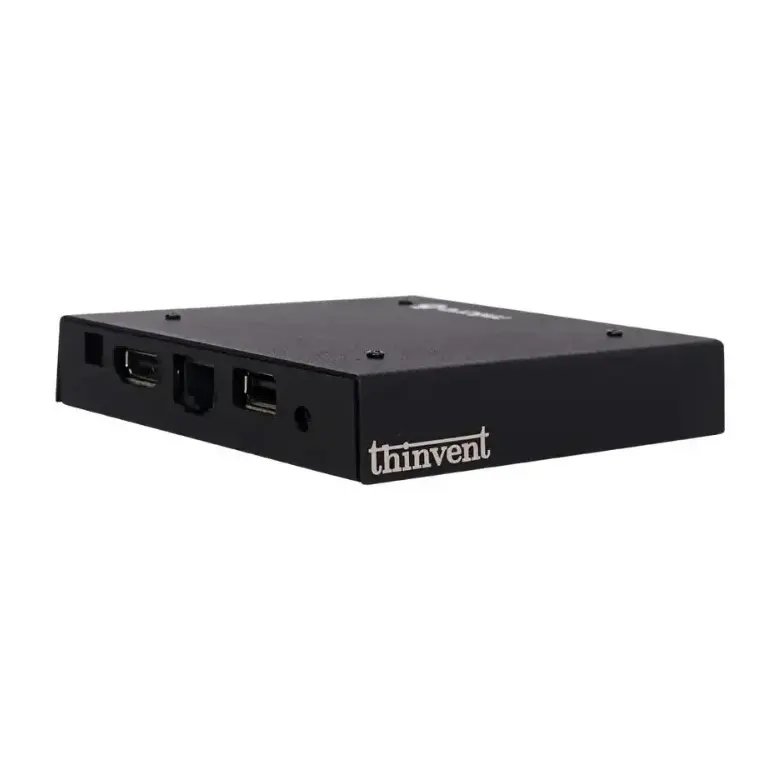
Thinvent specializes in robust, fanless industrial computers ideal for embedded system deployments. Our product range, including the Aero Mini PC series, exemplifies the core principles of embedded design. These systems feature efficient Intel processors, fanless operation for dust resistance, and support for multiple operating systems—from Windows 11 IoT and Pro to Ubuntu Linux and our proprietary Thinux™ embedded platform. Built for reliability in demanding environments, Thinvent computers are perfect for automation, digital signage, edge computing, and thin client applications, offering a compact, powerful, and versatile foundation for your specialized projects.